



Last updated: January 16, 2019
How to install Java JDK (Java Development kit 12) on Mac OS. Download and install Java on Mac OS X. We will also update the JAVAHOME environment variable ne. Refer to sk117065: 'Mobile Access SSL Network Extender, Compliance Scan and Secure Workspace are not working after installing or upgrading Java on the endpoint PC to Java 8 update 131' Mac OS X. Important: The Java SE 6 1.6.037 update uninstalls the Apple-provided Java applet plug-in from all web browsers. With the release of Java 7 Update 6, Mac users were able to download the latest Java version for OS X from Java.com. Before Java 7 Update 6, Apple provided and maintained its own “flavor” of Java for Mac. Update Office from the Mac App Store. But you can also manually download the updates: Open the Mac App Store from your Dock or Finder. Click Updates on the left side menu, then click Update All, or the Update button next to the apps that you want to update. Early access with Office Insider.
Update: Please see our Java Support in Safari 12 article for the latest information on Java support in Safari on macOS. The option to allow plug-ins described below is no longer supported by Safari.
No matter which web browser you use on your computer, you will need the Java plug-in from Oracle in order to view content that uses Java, such as Java applets. The Safari web browser on Mac from Apple is no exception. Java applets are common on the Internet. It is important, therefore, to know how to enable and disable Java in Safari on Mac if it is your web browser of choice.
I Cannot Download Java Update Mac Ios
First, please be certain the version of Java on your computer is current. Once you have verified Java is installed on your computer, please follow the instructions below to learn how to enable or disable Java in Safari on Mac.
1. Launch the Safari application, and click the Safari file menu. Select Preferences from the drop-down menu.
2. The Preferences dialog will launch in a new window. Click the Security icon.
To enable Internet plug-ins, including Java, to load in Safari, check the Internet Plugins: Allow Plug-ins check box. Unlike Safari on Windows, there is no individual check box for Enable Java for Safari on Mac.
3. When you encounter Java content in Safari, Safari will block the content from loading. You will see a notification in the browser window where the Java content would otherwise load:
4. Click the right-arrow in the notification. A Do you want to trust the website… dialog will display.
In this case, we visited the Java.com web site to load a test Java applet. Since we trust the web site, we clicked the Trust button to allow java.com to use the Java plug-in. When we re-visit the Java content on this web site, the Java content will now display.
5. You can manage your trusted web sites, and choose degrees of trust, by returning to the Security settings of Safari’s Preferences window. Adjacent to the Internet Plugins: Allow Plug-ins check box, click the Website Settings… button.
A new dialog will launch. The dialog displays all of the Internet plug-ins currently installed. To manage the web sites you have trusted to use the Java plug-in, click Java in the left navigation pane. The list of web sites you have already trusted will display.
Use the pull-down menu adjacent to the web site in the list to choose a level of trust you want to extend to this site. You may choose from Ask, Block, Allow or Allow Always (or Run In Unsafe Mode). You may delete a web site from this list by highlighting it with your mouse, and clicking the minus button at the bottom of the list.
Thank you for visiting Tech Help Knowledgebase to learn how to enable and disable Java in Safari on Mac.
Tech Help Knowledgebase creates how-to articles and video tutorials for common issues, and provides technical support for the categories covered by our site.
Get Support.
You may want to print these instructions before proceeding.You should read each step completely before performing the action it describes.Because these products may change slightly each semester, I would appreciate it if you would let me know if you find any discrepancies between these instructions and what actually happens when you try to follow them.
Mac Os Java Update
IMPORTANT: Install Java first, BEFORE you install Eclipse.
Java
The following instructions were composed for installing Sun Java 1.5.0_08 (aka JDK 5.0 update 8).This may not be the latest version, but it is the one that we are using this semester.Note: Java is already installed as part of Mac OS X, so no further installation is necessary for these machines.Ensure, though, that you have the right version by typing java -version to the unix command prompt;the response should be something like java version '1.5.0_08'
A typical Java installation takes about 400 megabytes of disk space.The installation process reports the exact size.
Downloading
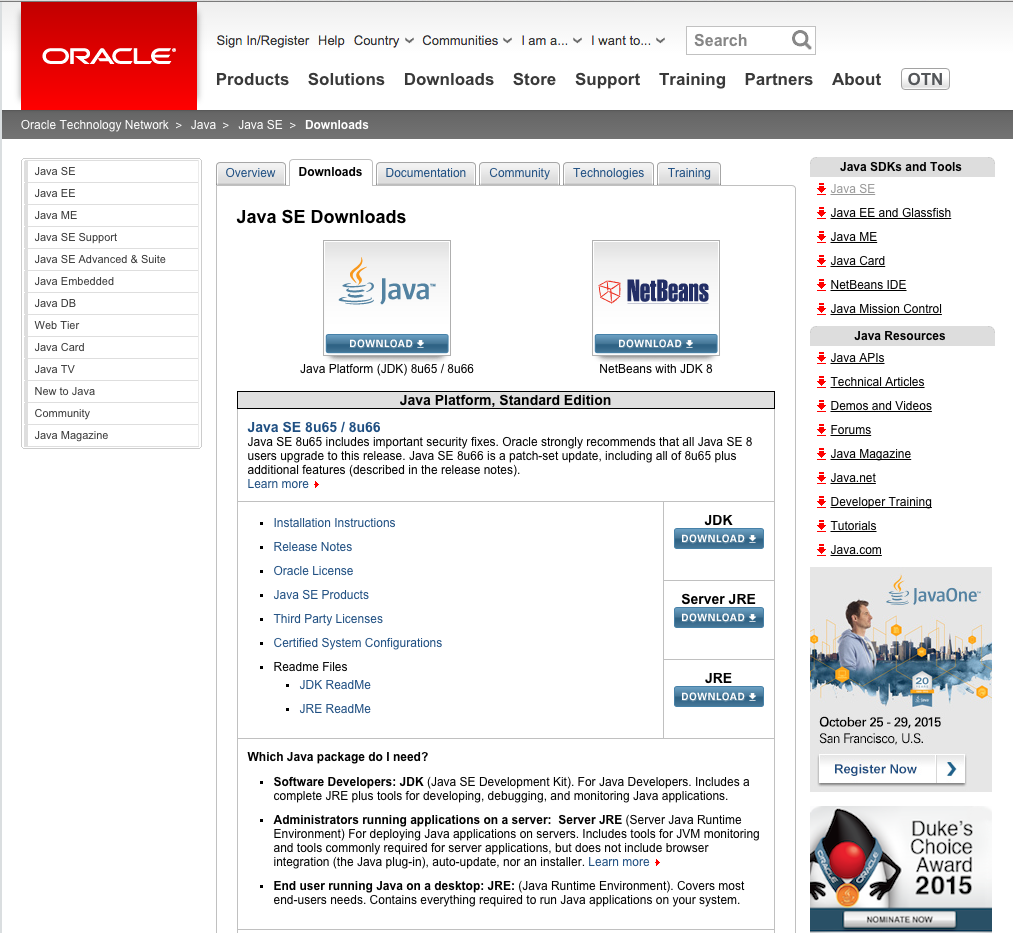
- Click Java SE Downloads
A page, with this label in orange, will be displayed in your browser. - Find the section labeled JDK 5.0 Update 8 and click its Download button (the fourth one from the top). Click Yes to the Security Window pop-up, if it appears. A page, with the label Download in orange, will be displayed in your browser.
- Click the Accept button, which appears under Required in red (it is in a small font: look for it carefully).
Again, click Yes to the Security Window pop-up, if it appears. This page will re-display itself, with this information absent. - Find the black bar labeled Windows Platform - J2SE(TM) Development Kit 5.0 Update 8
- Click the link labeled Windows Online Installation (typical download size is ~33.7MB), Multi-language
- Save the file it is about to download somewhere on your disk drive. The file will be named jdk-1_5_0_08-windows-i586-p-iftw.exe. The exact form of this interaction will depend on the version of your operating system (on mine clicked Save to the File Download - Security Warning pop-up; then I specified the location for the file; and then I clicked Close to the Download complete pop-up). Store this exe file somewhere permanent on your disk drive, so that you can reexecute it (reinstall Java) later, if necessary. This file is only about 250KB (1/4 MB).
- Terminate (X) any windows remaining from this process (e.g., the Download window).
Installing
- Double-click the file that you just downloaded, to run it.
Click Run to the Open File - Security Warning pop-up. You will see a Windows Installer window temporarily then a Preparing to Install window temporarily. You will then see a License Agreement window. - Click the 'I accept the terms...' button.
- Click the Next> button.
You will see a Custom Setup window, for J2SE Development Kit 5.0 Update 8. The default is to get a full installation (~264Mb), which is what you want. - Click the Next> button.
- You will see an Installing window (for J2SE Development Kit 5.0 Update 8), whose progress is shown by progress bars (on various panes). Be patient: many megabytes of information is being downloaded and then used to perform the actual installation; sometimes the progress bars lool like they are making no progress.
- Eventually, you will see another Custom Setup window, for J2SE Runtime Environment 5.0 Update 8. The default is to get a full installation (~131Mb), which is what you want.
- Click the Next> button.
- You will see a Browser Registration window. Select whatever browsers you want to register for,
- Click the Next> button.
- You will see another Installing window (for J2SE Runtime Environment 5.0 Update 8), whose progress is shown by progress bars (on various panes). This installation will take less time than one for the Development Kit.
- Click the Finish button on the Installation Completed pop-up window.
Free Java Download For Mac
Eclipse
The following instructions were composed for installing Eclipse 3.2 on Windows.The process for Mac/Linux should be similar.If later versions of Eclipse come out before I update these instructions, you might have to go through a slightly different process (please contact me if you do).
Run Java On Mac
A typical installation takes about 134 Mb of disk space (plus the 120 Mb download, which you should keep on your machine, in case you need to reinstall it).
Downloading
- Click Eclipse 3.2
A page, with the label eclipse downloads, will be displayed in your browser. - In the first section, find the text Download Now: Eclipse SDK 3.2, Windows (120 MB)
- Click the icon to the left of this text, or the part of the text labeled Eclipse SDK 3.2
If you are using a Mac, it should sense it and display Mac instead of Windows. If you are not using the operating system it recognizes, click the link labeled Other downloads for 3.2 instead. - Click the icon to the left of the text Download from: for using the default mirror site (or click a site from the list displayed in the box).
- Click the Save button to download, somewhere on your disk, the file named eclipse-SDK-3.2-win32.zip (for PCs). The exact form of this interaction will depend on the version of your operating system. Store this zip file somewhere permanent on your disk drive, so that you can unzip it (recreate Eclipse) later, if necessary
- Terminate (X) any windows remaining from this process.
Installing
- Unzip this file that you just downloaded.
On most Windows machines, you can- Right-click the file.
- Move to the WinZip command.
- Click Extract to here
- Create a shortcut on your desktop to the eclipse.exe file.
On most Windows machines, you can- Right-press the file eclipse.exe
- Drag it to the desktop.
- Release the right button.
- Click Create shortcut here
- Double-click the shortcut to Eclipse that you just created. In the Workspace Launcher window, in the box following Workspace:, should appear something like C:Documents and Settingsusernameworkspace (where username is your login on the machine). If you want, you can type in (or browse) another location for the workspace file to be created, but I advise accepting the default.
- Check the box labeled Use this as the default and do not ask again.
Aside: you will be using one workspace during the semester, checking projects in and out of this workspace. If you ever want to re-enable the display of this window, once Eclipse starts, you can- Select Window | Preferences.
- Click the + in front of General or double-click General (after the +)
- Click Startup and Shutdown
- Check the box labeled Prompt for workspace on startup.
- Click OK
- If you want easy access to the workspace, create a shortcut to it (see the instructions above), putting the shortcut on your desktop.
- Download (right-click and Save As) Course Library Jar into the same folder that you are using as your workspace (or move this file in the workspace fodler after downloading it elsewhere).
- In Eclipse, select Windows | Preferences
- Click the + in front of Java or double-click Java (after the +)
- Click Installed JREs
- Under the Name column, double-click jre1.5.0_08.
- Click the Add External Jars... button.
- In the Jar Selection window, navigate to your workspace folder, and double-click the file cs15-1xx.library.
- In the Edit JRE window, click OK
- In the Installed JREs window, click OK
- Terminate (X) the Welcome window
You can always get it back by selecting Help | Welcome - Terminate (X) the Eclipse window.